
Design human-centered research
More from Chapter 1 in "Doing Qualitative Research Online"

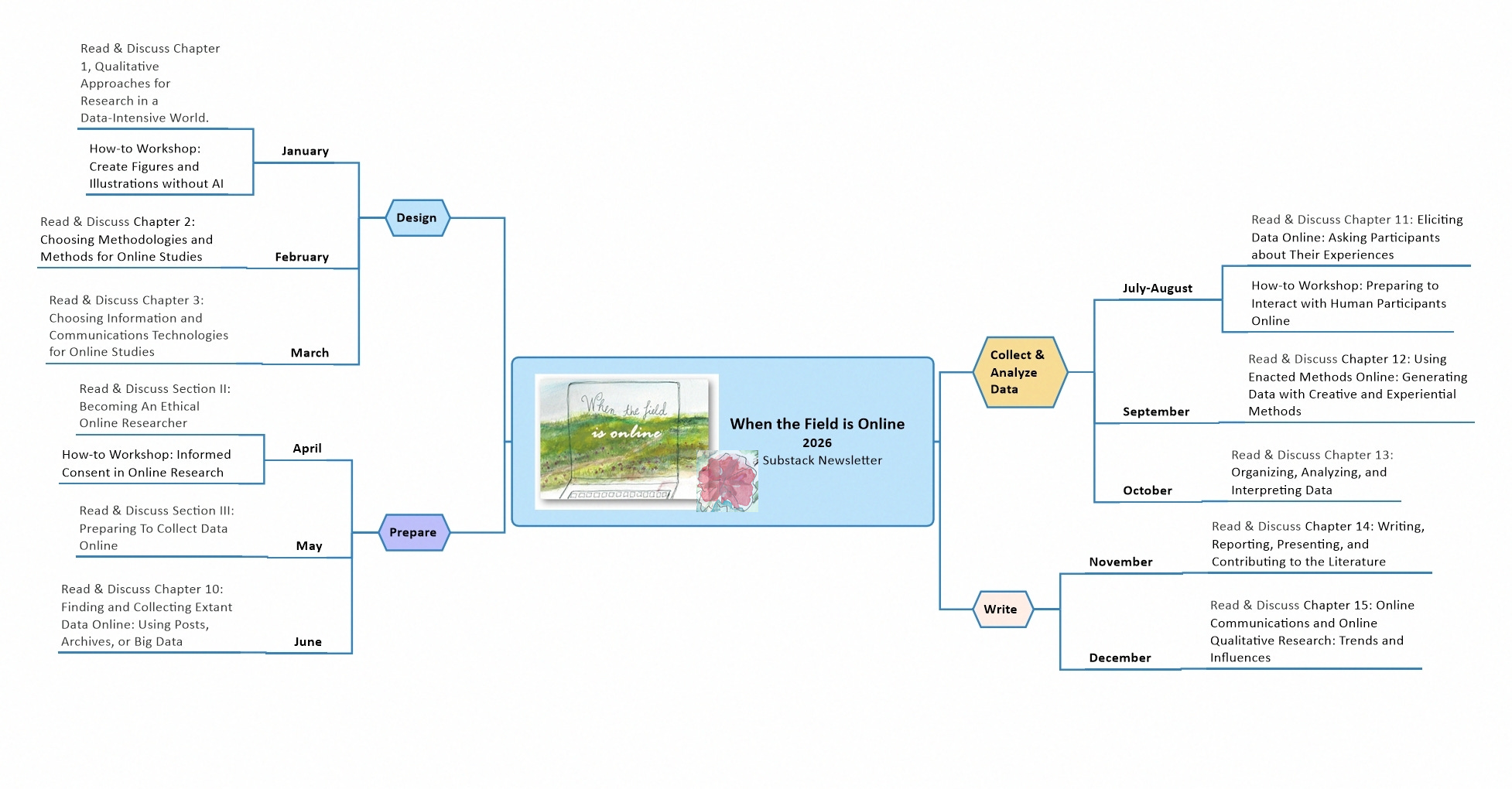
This year, newsletters are focusing on human-centered qualitative research in a digital age. We’re working through my 2022 book, Doing Qualitative Research Online, and discussing updated ideas and materials. Chapter 1 topics are highlighted in January newsletters. In this newsletter we’ll start high-level thinking about design options and related questions about our stance in relation to the project.
Find a discount code to purchase the book and library options here. If you’ve missed posts, the archives are open-access:
Qualitative Approaches for Research in a Data-Intensive World
Read and Discuss “Doing Qualitative Research Online” Options for obtaining or accessing the book.
What do I mean by human-centered research?
Human-centered qualitative research entails human researchers studying the human experience. We are interested in the experiences, perspectives, and perceptions of individuals, families, teams, groups, organizations, cultures, or societies. People share their views and understandings directly, as human participants in our studies, or indirectly, through their writings, creations, or artwork.
In Chapter 1 (starting on page 12) I described three main types of qualitative data collection as extant, elicited, and enacted. I’ve updated my thinking and reframed those types as Find, Observe, Ask, and/or Co-Create.
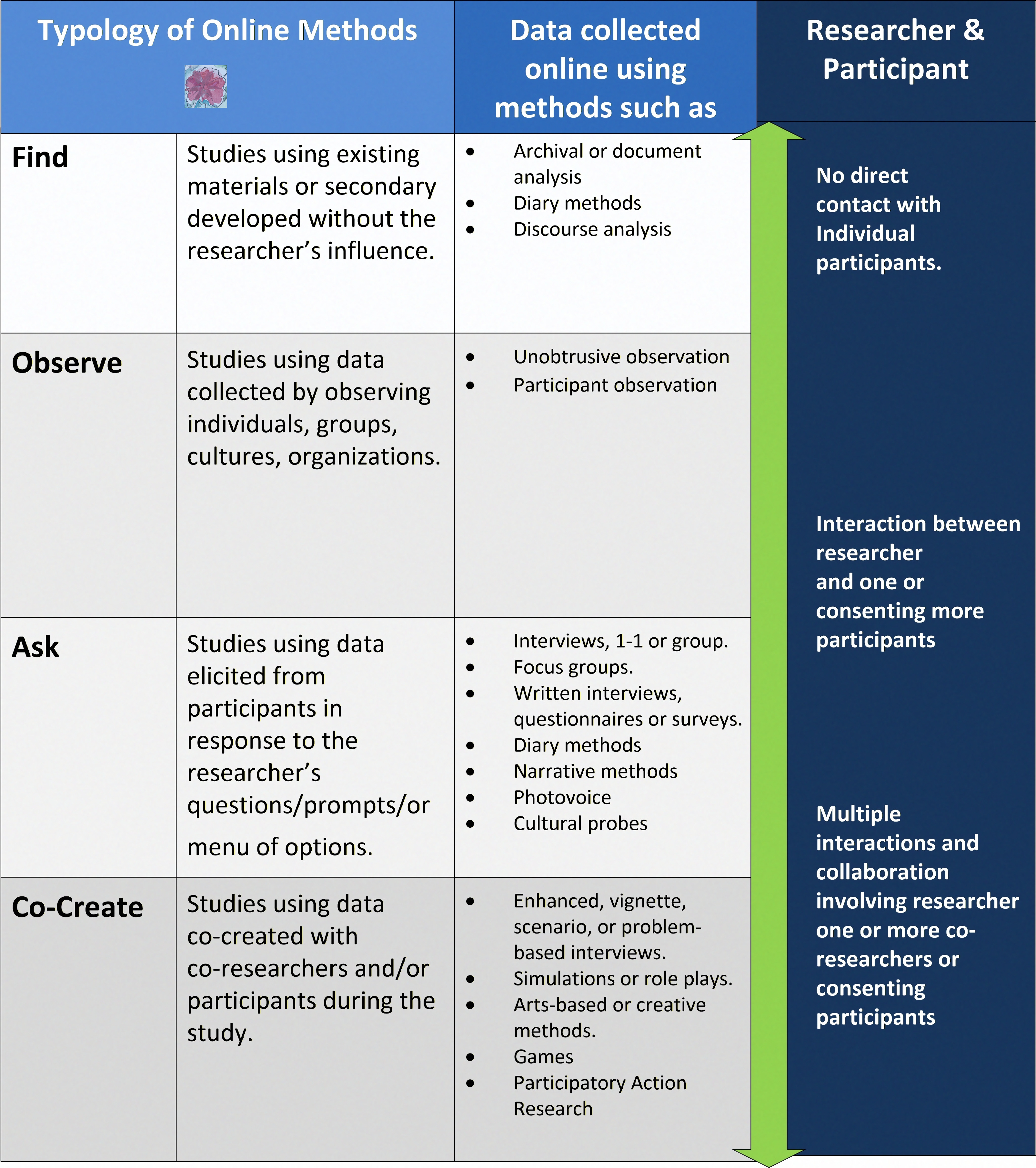
The arrow in this figure is intentional. It represents a fluidity between categories and suggested methods. The intention here is not to create rigid categories, rather to begin thinking about the type(s) of data that will help us understand the research problem and answer the research questions. We begin thinking about the level of engagement we want with participants, and start considering options for suitable methodologies and methods.
Will you use one or more types of data collection?
If we rely on found materials, we have no direct interaction with the people who created them. Extant or secondary data can take many forms: pre-digital era materials that have been photographed or scanned, digitally-native records, or ephemeral posts on social media that be saved or might expire without a trace.
If we observe events on- or offline, we may or may not interact directly with individual participants.
When we move into the next two types we assume involvement of consenting participants. We might ask participants questions or prompt them to answer, show, demonstrate their response. If we want to go deeper, with multiple interactions over a defined period of time. The individuals involved might take an active role from the beginning as co-researchers who help to define the problem and design the study. Together researchers and participants co-create data.
As we’ll see, the presence of human participants influences every decision associated with the project. While this is true in any study, it is particularly crucial in online studies, where recruiting, verifying, and building trust with participants are significant (and time-consuming) activities. Ethical protocols and expectations vary by type as well. We’ll explore methodologies, methods and ethics in coming months.
Taking a Stance in Relation to the Study
At this early design stage we can also start to think about our role(s) vis a vis the study and any participants. Positionality comes into play, but there is also a practical side. What stance or attitude informs the way(s) we collect data? ? Kvale (2007) described the miner and traveler metaphors for the ways interviewers approach participants. I added the gardener .to signify the importance of cultivation when building relationships essential to the project.
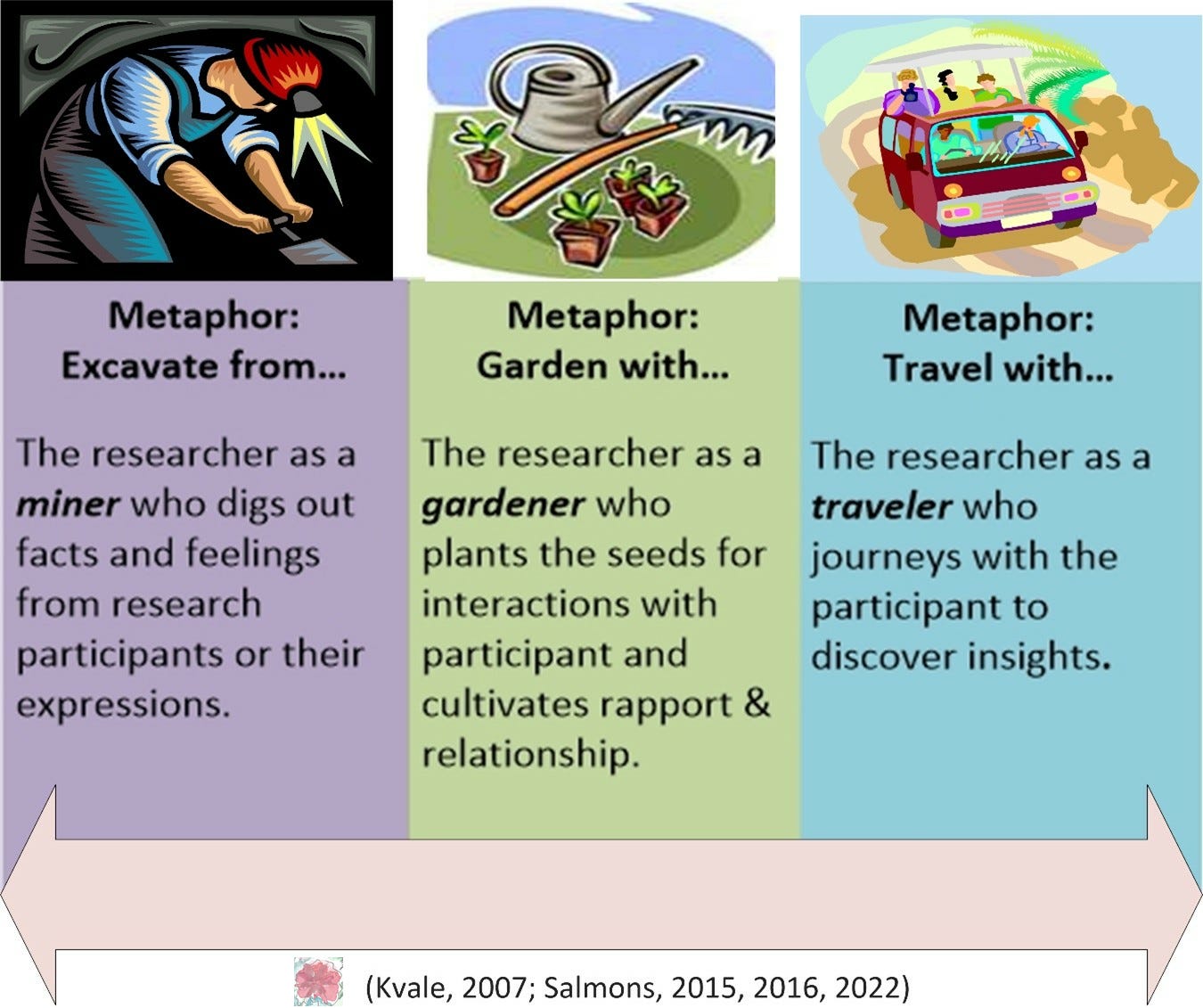
We might approach the study as a miner who wants to dig for existing materials or wants to dig into the participant’s experiences.
We might approach the study as a gardener who takes a step-wise view to cultivate relationships and plant seeds that will take time to sprout and grow.
We might approach the study as a traveler who sees the research project as a journey.
Or we might find that we need different modes at different stages of the process. Perhaps some cultivation is needed before one has the rapport needed to mine for answers? Or perhaps we mine the literature and preliminary sets of materials before we craft research questions? Perhaps cultivation is needed before one has the trust and shared commitment needed to journey with co-researchers?
Since the researcher is the instrument in a qualitative study, we need to think about our own personalities, strengths, and limitations. Some of us are naturals at meeting new people and getting them on board with our ideas. Others just want to get to the answers and move on. Some are ready to delve into new material and find the hidden gems; others are intimidated by the enormity of the task. Whatever our abilities and tendencies, when we think about how we will approach the study we need to identify any areas where we need to develop our skills or mindset so we are ready to carry out the study in the best way we can.
Thoughts or questions?
What do you think about at the early design stages of a study? Share ideas, suggestions, resources, or questions in the comment area.
As human-centered researchers we use technology tools as a means of connection, communication, and collaboration. We won’t be discussing the use of AI to collect or interpret data. For more about qualitative researchers’ views on these matters, see this new article:
Jowsey, T., Braun, V., Clarke, V., Lupton, D., & Fine, M. (2025). We Reject the Use of Generative Artificial Intelligence for Reflexive Qualitative Research. Qualitative Inquiry, 0(0). https://doi.org/10.1177/10778004251401851

This license enables reusers to copy and distribute the material in any medium or format in unadapted form only, for noncommercial purposes only, and only so long as attribution is given to the creator. In other words, you can use and share but you do NOT have my permission to upload the newsletter or art to AI.

Thanks to Beth Spencer for this badge, indicating that no AI tools were used to create this post!